Crafting Connections – Autumn Workshops 2025
The Crafting Connections: Heritage and Wellbeing toolkit demonstrates how heritage-based creative activity can support connection, reflection, and wellbeing.
From our Crafting Connections: Heritage and Wellbeing toolkit, we delivered a programme of ten weekly workshops at the Manchester Histories Hub in Manchester Central Library during the autumn of 2026. Each Wednesday afternoon session explored a theme inspired by Manchester’s cultural craft heritage, followed by a hands-on creative activity. Sessions were often enriched by a short film clip from the North West Film Archive or an audio recording from the Archives+ collection.
'The importance of creativity to all levels of class and education throughout history — how gifted people were, and the time, care, and skills they used to create beautiful objects in spite of their background or education.'
The workshops also encouraged participants to share their own knowledge, skills, and memories, while experimenting with a wide range of creative activities. What follows is an overview of each week, highlighting how learning, conversation, and creativity developed over time.
Weave Together
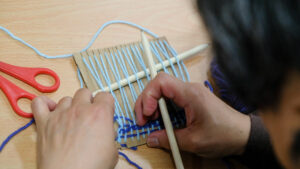
In the first workshop, we explored the tradition of handloom weaving in 18th-century Lancashire, before the industrial revolution brought widespread mechanisation and the decline of the craft. Using only cardboard and wool, we made mini handlooms and practiced weaving. We were delighted to learn that one participant is a fibre artist, and she shared how her own weaving practice is rooted in traditional techniques.
Pattern Book
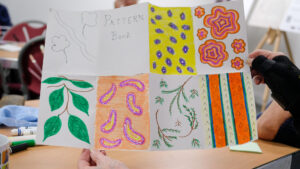
After watching a film about design and printing in the Lancashire cotton industry, we reflected on the colours and patterns that enrich our surroundings. Participants brought examples to share — including a handmade shirt from the 1970s — before creating their own pattern booklets.
Model City
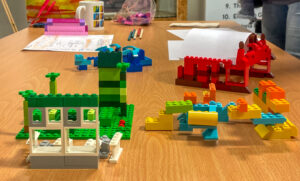
Our third session focused on the City of Manchester Plan 1945 by R. Nicholas. The plan included some surprising proposals, such as demolishing Alfred Waterhouse’s Town Hall — thankfully never realised, and now a protected landmark. Quotes from the plan sparked a lively discussion about attitudes towards city planning and inspired us to imagine our ideal city. We each built a structure or public space using Lego bricks, combining them into a collaborative model city.
Group Draw
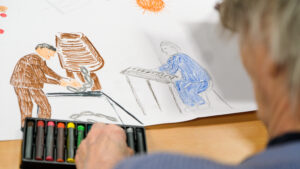
The Manchester Local Studies image collection includes photographs of local people and their diverse skills — from shoemakers to trapeze artists to tandem cyclists. Using these as a starting point, we discussed our own skills, past and present, sharing stories and memories. On a long roll of paper, we collaboratively filled the space with drawings of the skills we have and those we hope to learn. One participant shared that her ancestors were chainmakers, prompting further reflection on heritage and craft.
Hand Made
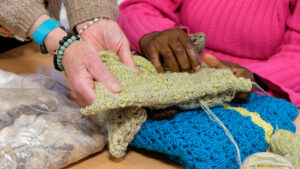
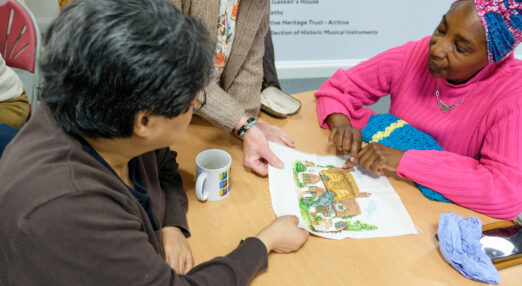
The following week, participants brought in handmade objects to share with the group. These included intricate embroidery, clay figures, woven fabric, and mosaic tiles. It was inspiring to hear about each person’s artistic practice and exchange ideas. Mark, a Manchester Histories volunteer, shared photographs of his hand-built, realistic miniature railway. We then created our own handmade pieces using air-dry clay, experimenting by shaping it to imitate other materials.
People in Our World
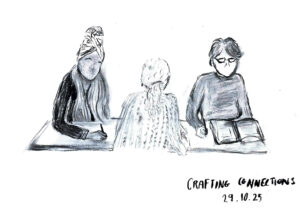
In week six, we explored the public and private drawings of L. S. Lowry alongside Paul Graney’s observational sketches. Both artists captured the everyday lives of working-class people, celebrating their spirit and acknowledging their hardships. We practiced observational drawing within the group and shared reflections from our experiences that day.
Sketching Your Surroundings
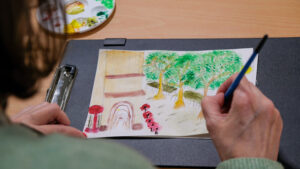
The following week shifted our focus from people to place. Equipped with clipboards, pencils, and paper, we sought viewpoints inside or outside Central Library to sketch. Back in the Hub, we added watercolour to our drawings. The results offered a beautiful glimpse into how each person perceives their environment. One participant was so inspired that she purchased her own watercolour set to continue exploring at home.
Making Your Mark
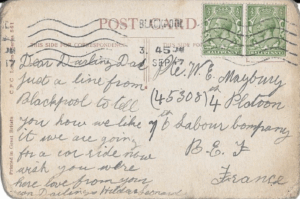
This session centred on the idea that history belongs to everyone, and anyone can record it. We discussed how archives are created — through digital footage, oral histories, photographs, and artwork. We listened to Paul Graney’s audio recordings of folk music and interviews with working-class people in Lancashire, and we explored the personal archive of Ann Adeyemi, an anti-racist teacher from Greater Manchester, housed in the Ahmed Iqbal Ullah RACE Centre Archives. We reflected on what we choose to keep or discard, and what we consider important to pass on. Mark shared postcards exchanged between his great-grandparents during WWI in 1917, prompting a thoughtful conversation about memory and preservation.
Storytelling
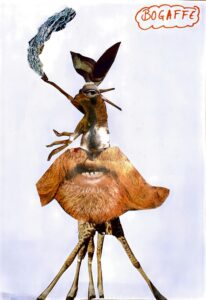
Greater Manchester and Lancashire have a rich folklore tradition, including tales of the boggart of Boggart Hole Clough and the headless dog of Deansgate. Sound recordings from the Graney archive enhanced our exploration of these stories and encouraged participants to share others passed down through families and communities. Each attendee created a collaged mythical figure with an accompanying story, and we ended the session by sharing these imaginative creations.
Sing It!
Our final workshop explored the songs that accompany us through life — the melodies we remember and the roles they play. We listened to recordings from the Archives+ collection and discussed protest songs. One highlight was The Story of Cotton, written by Paul Graney and performed by Marie Little, an emotive piece about child labour in the mills. As one participant noted, she learned “the importance of childhood songs — how music taps into past memories.” We also discovered that our volunteer Louise has exceptional knowledge of nostalgic TV theme tunes!
Manchester Histories would like to thank all participants for their enthusiasm, creativity, and willingness to share their experiences, and we extend special thanks to our volunteers for their invaluable support.
'I will look again at taking up past creative activities I enjoyed.'
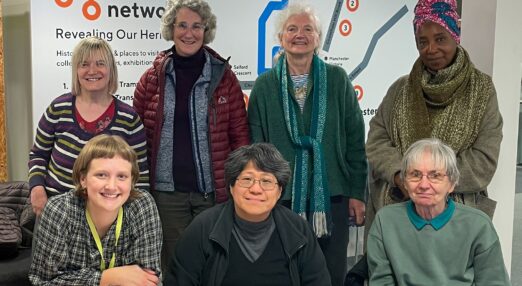
43 Participants took part in the workshops
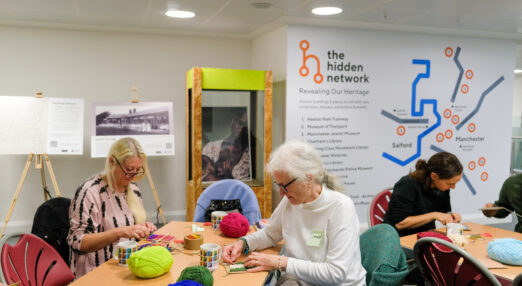
55 Artworks created
21 Objects brought in by participants and shared with the group