
Rachel Scott: Higher Education Visionary
Rachel Scott was a pioneer of women’s higher education whose influence on Manchester has been largely overlooked. Discover how her determination and leadership helped secure university education for women and shaped the future of Owens College and the University of Manchester.
If you asked most Mancunians, which historical woman has had the greatest impact on Manchester society, very few or any would name Rachel Scott (nee Cook). In fact, Rachel has largely been erased from our city’s history despite her contemporaries holding her in extremely high regard. The magazine of the Manchester High School for Girls reported at a meeting of the school’s Old Girls Association in December 1902, E.J. Broadfield described Rachel as ‘one of the most brilliant ladies who could ever be considered a citizen of Manchester’.1 The Editor of the Girton Review shared Broadfield’s view of Rachel, writing in the newspaper’s obituary following her death: ‘the higher education movement has nurtured no fairer flower than this brilliant, cultivated, and lovable woman’.2 This blog post will bring to the fore Rachel’s importance in the development of women’s higher education in Manchester.
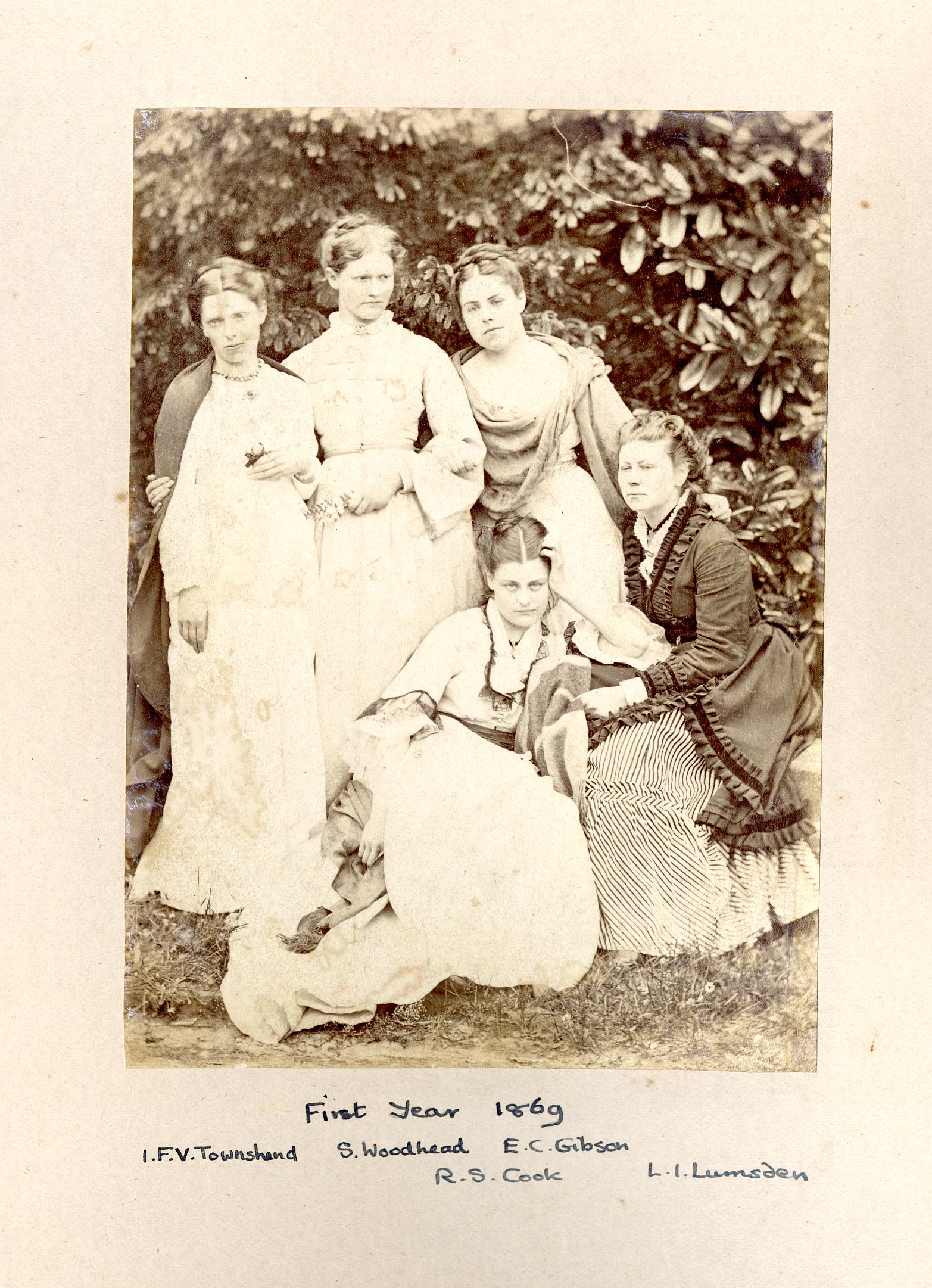
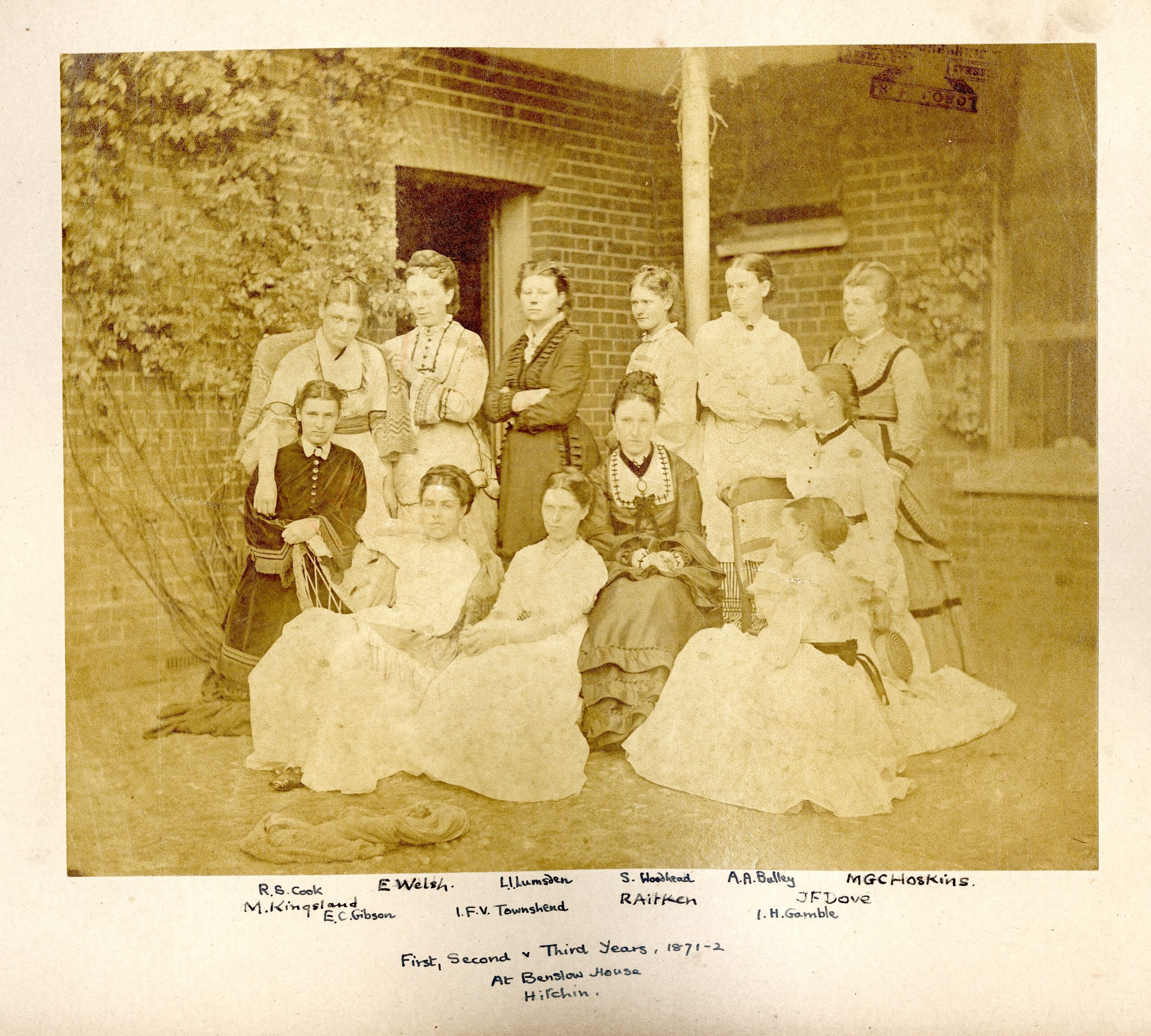
Rachel was born on 1 February 1848 in St Andrews, Scotland. She was the youngest daughter of Reverend John Cook, Professor of Ecclesiastical History at the University of St Andrews and his wife, Rachel Susan Cook (nee Farquhar).3 In 1869, Rachel became one of the first seven students to attend Hitchin College, which later became Girton College, University of Cambridge.45 In 1873, Rachel became the one of the first two women to pass the University of Cambridge Classic Tripos examination.6 This was a remarkable achievement which lay the foundation for women to access higher education on the same terms as men. On 20 May 1874, Rachel married C.P. Scott, Editor of the Manchester Guardian in London. Following her marriage, Rachel moved to Manchester to live with her husband.
Three years later, in April 1877, Owens College, the only higher education institution in Manchester, officially decided to refuse to accept women students. As a result of Owens College decision, In response, Rachel obtained premises at 223 Brunswick Street, Manchester and persuaded lecturers from Owens College, who supported women’s right to higher education, to teach women to university standard for the first time in our city’s history.7 The Women’s College relied on donations to operate; Rachel was able to convince several Mancunian dignitaries to commit to fund the Women’s College for a period of six years. The Scotts were amongst the Women’s College biggest donors, donating £20 a year to its operations. 8 The supporters of the Women’s College held its first board meeting on 17 July 1877. At the meeting those present appointed Rachel as the Women’s College’s Honourable Secretary.9 In Victorian society, the role of Honorary Secretary was highly prestigious and required Rachel to manage the day to day running of the Women’s College.
Rachel combined her duties as Honourable Secretary with her role as one of the Women’s College’s governors. In her role as a Governor, Rachel was instrumental in the development of the Women’s College curriculum.10 In December 1880, Rachel played a pivotal role in the discussions which took place surrounding the Women’s College’s financial future. Those present agreed to send a memorial to the Owens College’s Senate asking them if they were willing to take over the Women’s College trust. It took over two years for Owens College’s Senate to respond to the memorial. On 24 April 1883, Rachel received Owens College Senate’s response, Owens College’s Senate proposed that the two colleges merge under their management. The senate would then authorise the opening of a Women’s Department for a probationary period of five years. However, the Senate’s offer came with two major conditions. First, the Women’s College’s donors would provide at least £500 a year for the Women Department’s upkeep for the next five years. Second, Owens College could close the Women’s Department for any ‘sufficient’ reason during or at the end of the five-year probationary period without any recourse from the Women’s College Governors.11 Despite the Owens College’s Senate’s poor terms, the governors of the Women’s College, decided to accept them due to them being the best chance to ensure women had access to higher education in Manchester.
Rachel was the driving force behind the Women’s College and was instrumental in forcing Owens College to reconsider its decision not to accept women students. At a special meeting held on 9 October 1883 to commemorate the opening of Owens College’s Women’s Department, Broadfield paid tribute to Rachel’s efforts:
Only those who worked with Mrs Scott could understand the extent of the difficulties she had to contend with, and he had no hesitation in saying that the courage she displayed in overcoming the difficulties was only surpassed by her determination to adhere to thorough-going instructions.12
Without Rachel’s consistent efforts Owens College and subsequently the University of Manchester would not have accepted women’s students. Although, Mancunians have forgotten Rachel’s name her legacy lives on. All Mancunians need to do, is to walk past the University of Manchester campus and see the thousands of women students accessing higher education to get a glimpse of Rachel’s legacy.
For more information on Rachel or to discuss her impact on women’s education in Manchester, please email: tom.trafford@hud.ac.uk
About the author
Tom Trafford graduated with a first-class degree in Contemporary Military and International History from the University of Salford in 2024. He graduated as valedictorian in history and politics and was awarded the John Garrard Award to mark this achievement. His performance at undergraduate level led to him being a recipient of a widening-participation scholarship from the University of Salford, which enabled him to become the first student to study an MPhil in Contemporary History at the university. Tom was awarded his MPhil with no corrections in October 2025. In January 2026, Tom commenced his PhD studies at the University of Huddersfield, where he received the Vice-Chancellor’s scholarship.