
Threads of a City: The Manchester Tapestry Project
A large-scale artwork made up of 30 panels celebrating the histories, stories, people, and spirit of Greater Manchester through collaborative textile design. A partnership project between Manchester Histories and Manchester Metropolitan University.
Threads of a City: The Manchester Tapestry Project
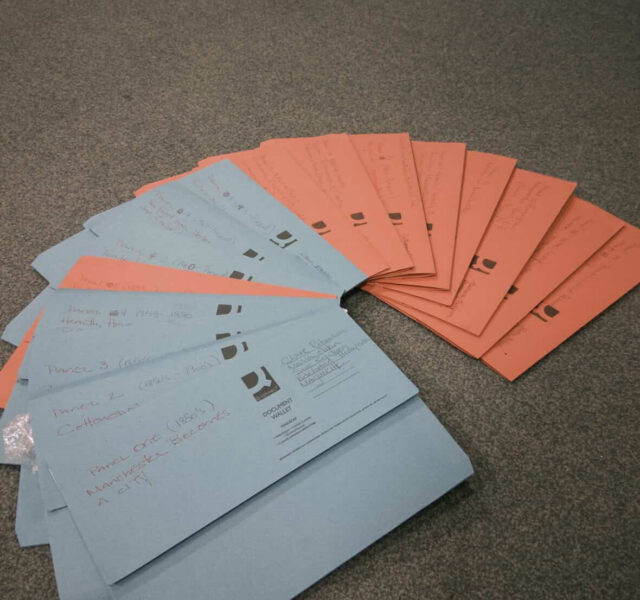
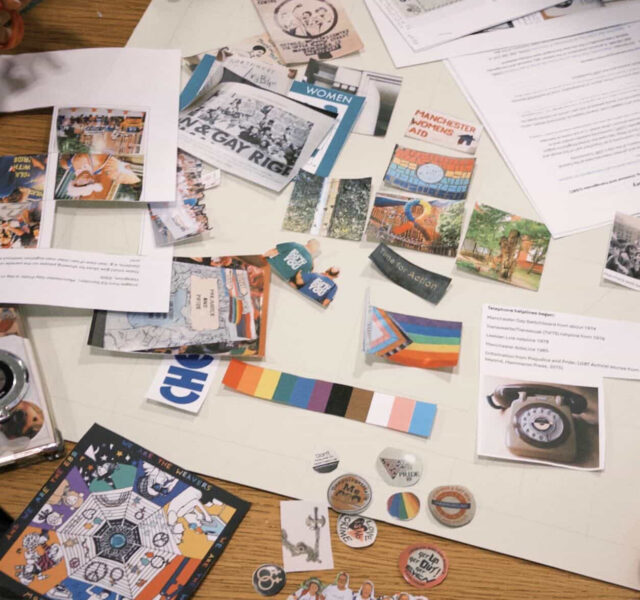
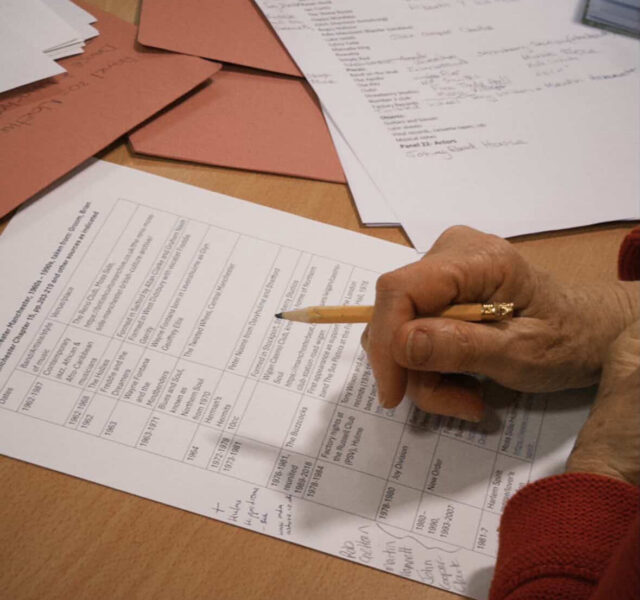
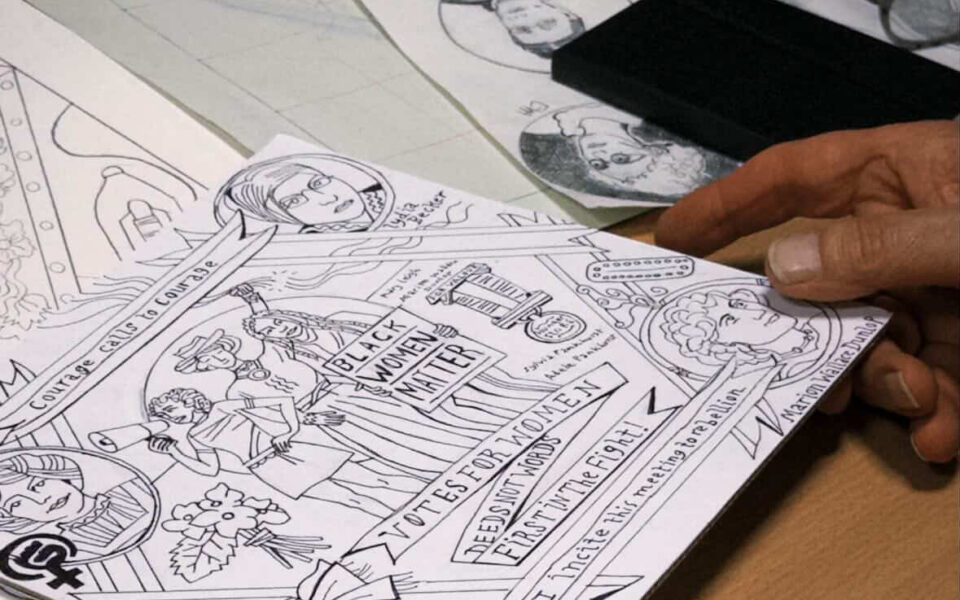
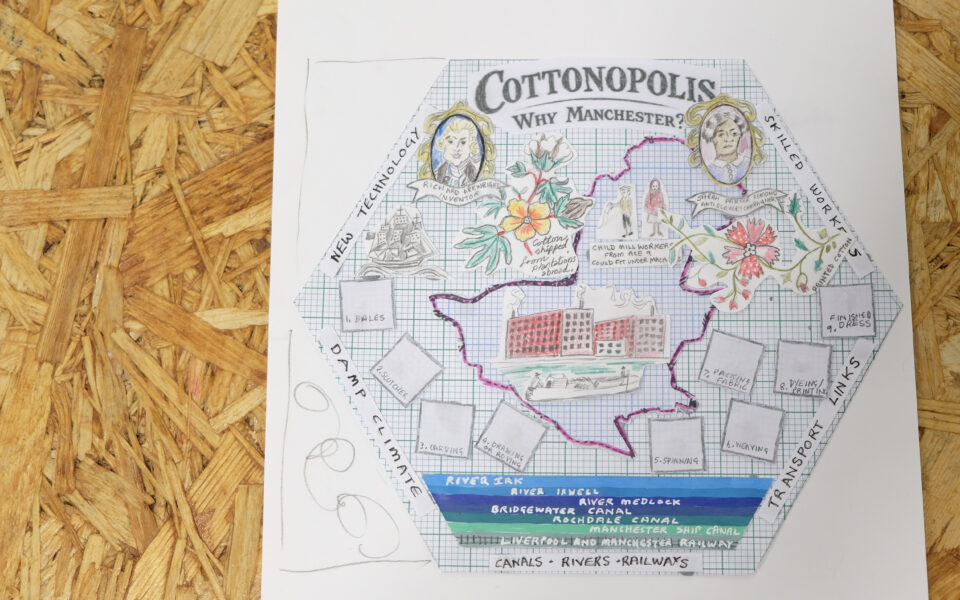
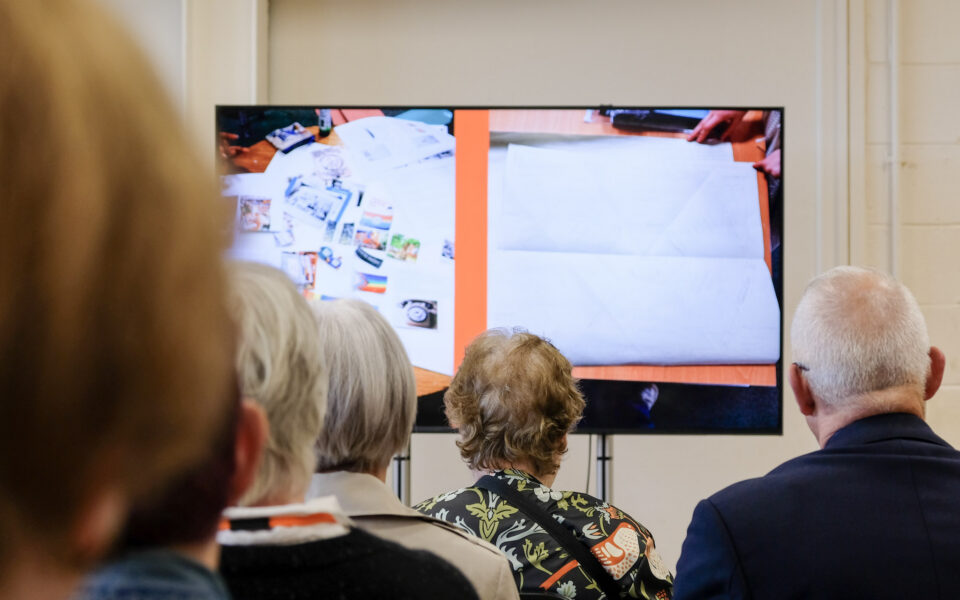
Over 17 weeks, participants worked as part of the research team to explore themes from Manchester’s rich histories, spanning 1853 to the present day. The aim of the project is to co-create 30 tapestry panels that will visually tell Manchester’s stories.
The research workshops were co-facilitated by Dr Lisa Gold, Manchester Metropolitan University, lead for the Manchester Tapestry Project, with Katie McKeever and Abbie Hawkins from the Manchester Histories team. Each group researched a specific theme which has helped inform the design of a tapestry panel. Themes include Northern Soul, dance and the Manchester music scene, alongside some of Manchester’s more complex and overlooked histories.
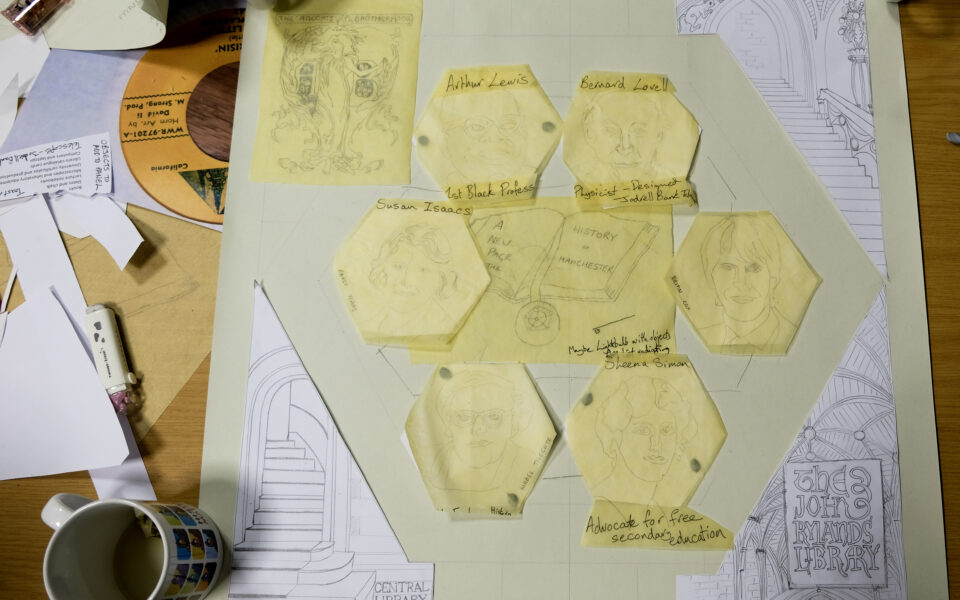
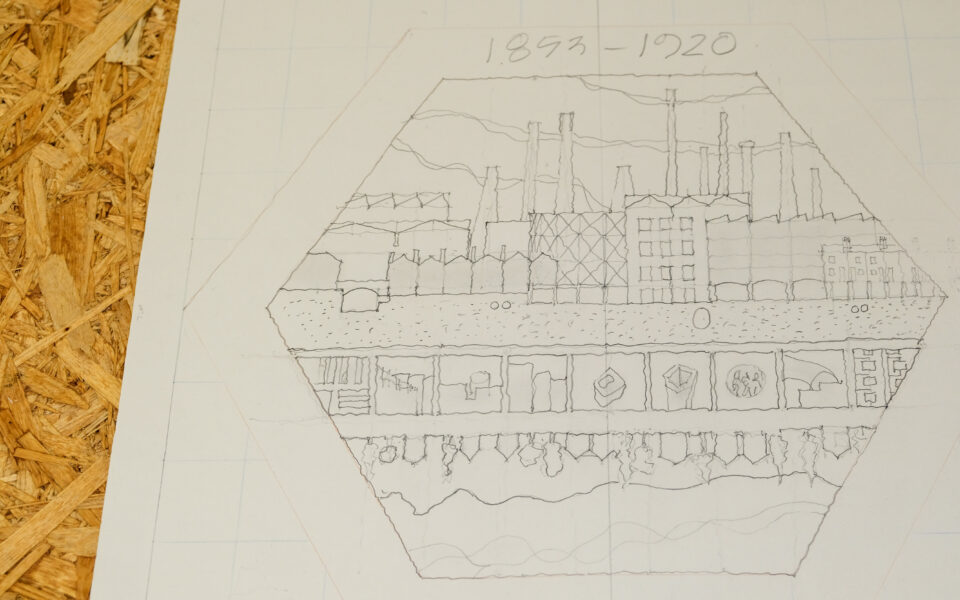
Following the research phase, the design team spent six months translating these community stories into the visual designs for the tapestry panels. The design phase was completed in August 2026 and we are now moving into the next stage of the project: bringing the Manchester Tapestry to life through collaborative embroidery and stitching.
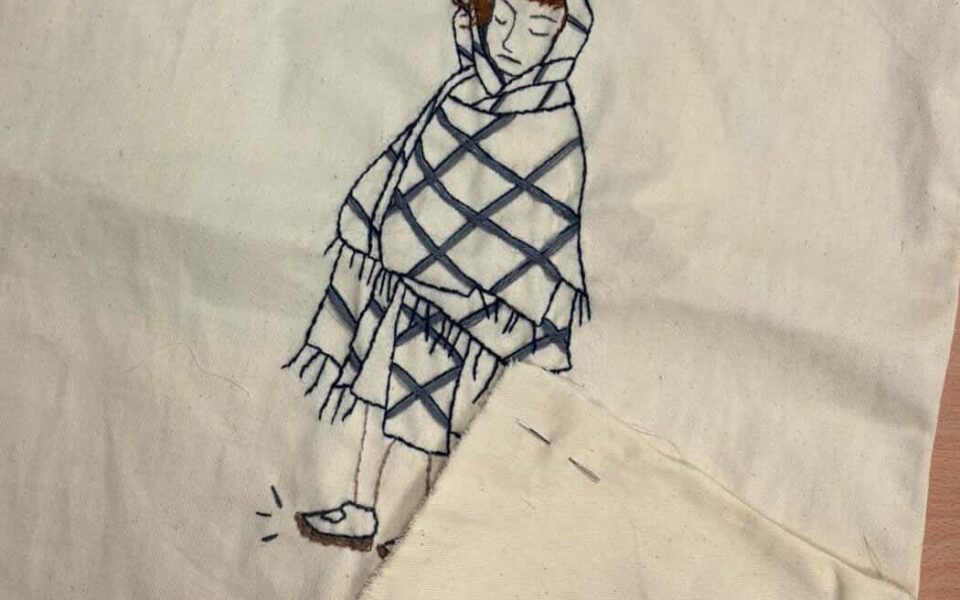
The first opportunity to stitch directly onto the tapestry took place at Manchester Histories Festival 2026 in June. From October 2026, regular public stitching workshops are taking place at the Manchester Histories Hub at Manchester Central Library and the Whitworth Art Gallery. Participants will work together on the panels, with all skill levels welcome and support available to learn and practise the stitches before contributing directly to the tapestry.
There will also be opportunities for existing community stitching groups to take on a panel and work together to complete it using the designated stitches. The stitching groups are also supported by MMU students and a dedicated group of volunteers from Manchester Histories.
Who Can Take Part?
The Manchester Tapestry Project has offered many opportunities for public participation, from researching and sharing stories to helping shape the designs of the tapestry panels. Now we’re inviting people to join the stitching team and help embroider the Manchester Tapestry.
You don’t need to be an experienced stitcher to take part. Our public stitching workshops welcome all skill levels, with materials provided and support available to help you practise the stitches before contributing directly to a panel.
This is a unique opportunity to explore how history, craft and storytelling come together in a participatory artwork reflecting Manchester’s diverse identities – and to make your own contribution to an artwork that will eventually be displayed in the refurbished Manchester Town Hall.
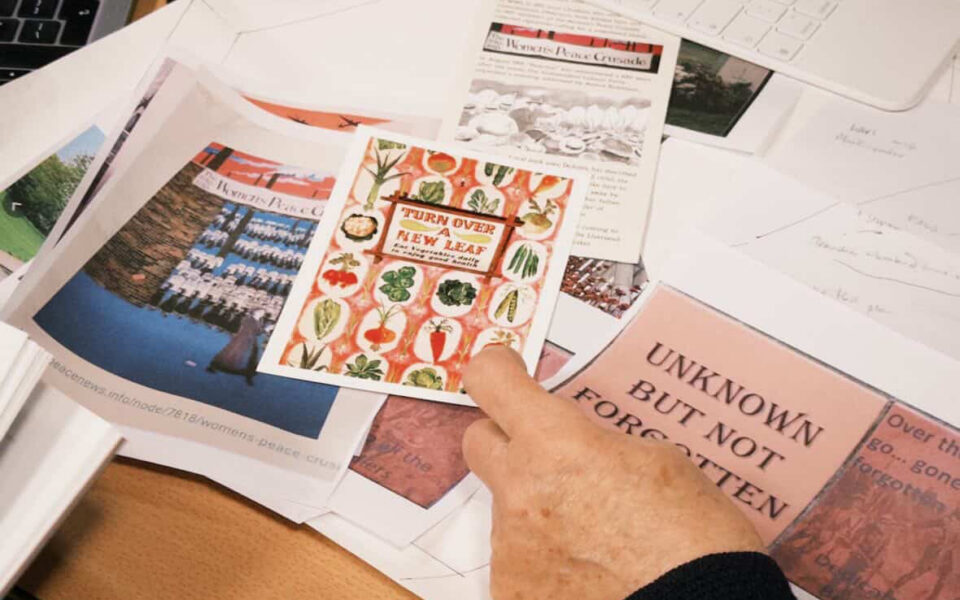
Threads of a City: The Podcast
This experience allowed me to explore how storytelling, community engagement, and digital media practices can come together to document and share local histories. It was especially meaningful to see how small, personal stories can contribute to a larger narrative of the city and history.
Project timeline:
4th February 2026 – Andrew Crummy, Designer of the Great Tapestry of Scotland, delivered an exciting talk about his large-scale textile artworks and shared advice on how we can approach our project in Manchester.
The Research sessions began, occurring every Wednesday, with groups of participants delving into the themes of the tapestry panels.
4th March 2026 – The Design Team met together for the first time and began the process of turning rich research into a visual representation of the panel’s theme. This will continue until all panels have been drawn up.
1st April 2026 – The Research sessions hit the mid-way point (Week 9 of 17 weeks).
27th May 2026 – The final research session marked a celebration of the participants’ hard work, commitment and enthusiasm so far.
4-6th June 2026 – The first Stitching workshops were held in the Manchester Histories Hub, during the Manchester Histories Festival 2o26, offering the first opportunity to embroider directly onto a panel.
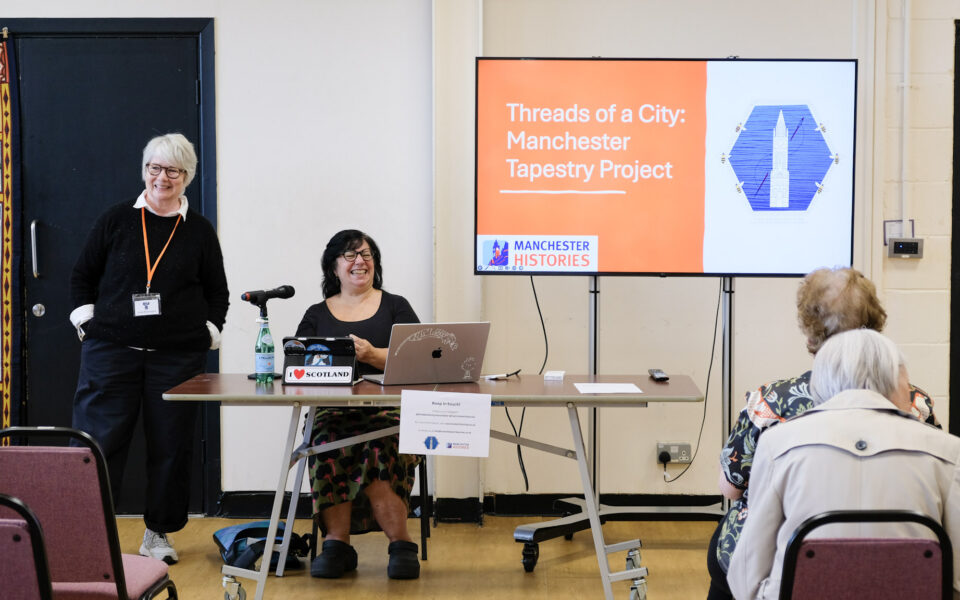
14 June 2026 – Lisa Gold, Project Lead, gave a talk at the Textile Society’s Manchester Antique and Vintage Textile Fair 2026. We shared the story of the project so far and invited people to join the project in the upcoming stitching phase.
26 August 2026 – A celebration in the Hub to mark the end of the design phase.
October 2026 – The Stitching phase begins, with regular public workshops at the Manchester Histories Hub at Manchester Central Library and the Whitworth Art Gallery. Participants will work collaboratively to embroider the tapestry panels, with further opportunities for community stitching groups to get involved.
Threads of a City: The Blog
Eleanor Godfrey, MA Textiles student at MMU, is assisting with project coordination. As part of her role, she has created the Threads of a City Blog, where she writes about each panel theme using the research collated by the participants. Eleanor is also the host for our Threads of a City podcast.
Eleanor’s work focuses on heritage and community textiles, specialising in woven constructed textiles. She has worked as a weaver in residence and run several workshops in different historical settings.
Click here to visit the project’s blog.
With Thanks to Our Supporters
Threads of a City: The Manchester Tapestry Project is generously supported by National Lottery Heritage Fund, This is Us: Tracing Manchester’s Histories project, Manchester Histories, the Whitworth, Manchester City Council, The Granada Foundation, Behrens, Visage Textiles, Kimberleys Krafts, Spinning Jenny, The Craft Cotton Co, and DeVere Yarns. We are grateful for their support in making this project possible.

Support Threads of a City
If you’d like to support the project, donations help us provide the materials and resources for communities to take part in creating the tapestry. Every contribution helps us keep opportunities to take part accessible and open to everyone.