The People’s Papers: Revisiting 1970s Manchester
PhD researcher Arielle Lawson shares some reflections from our recent co-sponsored event on her People’s Papers research project with the Working Class Movement Library, which aimed to spotlight Manchester’s legacy of 1970s alternative and community newspapers and broader grassroots urban activism.
In early November, I organized an in-person event at the Manchester Central Library in collaboration with Manchester Histories and the AIU Race Centre to share a public presentation of my “People’s Papers” project and, perhaps most importantly, to hear directly from those who were involved with this kind of alternative publishing and activism in the 1970s. While I had already talked with a few participants previously and learned so much in the process, this event was an amazing chance to get to hear from more people in the audience sharing about their experiences and actively in dialogue with each other as well as to contextualize these papers and forms of publishing within a much broader historical, social political context of the city.
Below I’ve shared a bit more about the research project as well as the materials and alternative urban histories that were discussed over the course of the evening. You can also watch the full recording of the event online here.
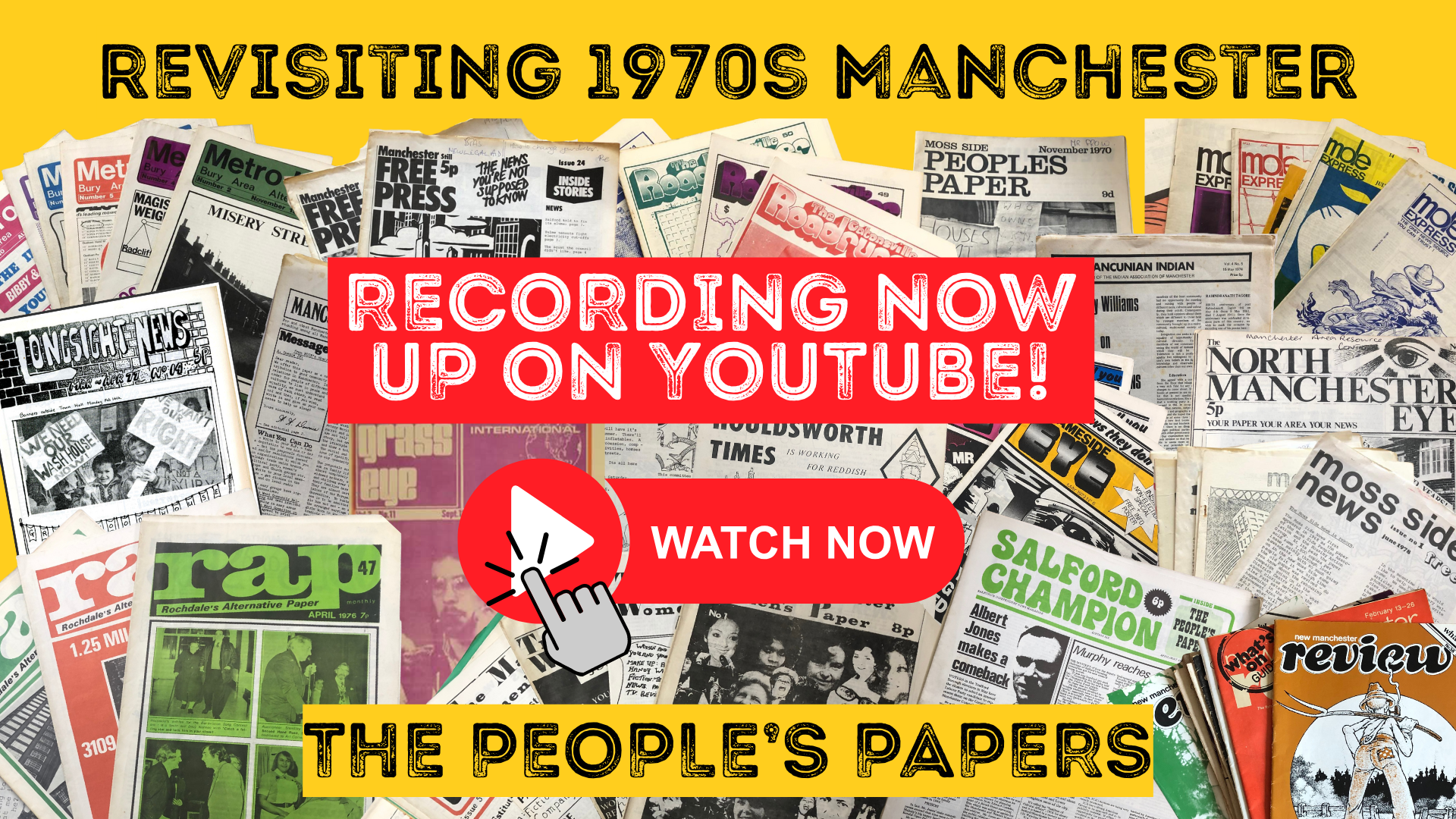
Visit the Manchester Histories YouTube channel to watch the talk in full.
About the research project:
Over the past six months, I’ve been exploring the Working Class Movement Library’s collection of 1970s alternative and community-based newspapers of Greater Manchester. With the title “The People’s Papers,” the aim of this archival research project has been to both assess, document and bring together the full range of different related materials included under this umbrella, but also to open up a window into 1970s grassroots and activist urban histories that too often get overlooked. In the process, I also hoped that sharing this archival practice in a more engaging and public way could make the archives more accessible, connected and “activated” within their rich historical, social and political contexts and broader material lifeworlds.
While there are a couple of more well-known “alternative” newspapers and magazines from the 1970s that have received more recent coverage — such as the recently digitized Mole Express (which was also written about on the WCML blog) — this period saw a whole blossoming of local and DIY publishing growing out of the underground cultural and activist scene of the time. With new methods of cheap printing, these “alternative” papers were often creative and crowdsourced projects developed collectively by small groups of people to meet a particular need of sharing information, news and resources.
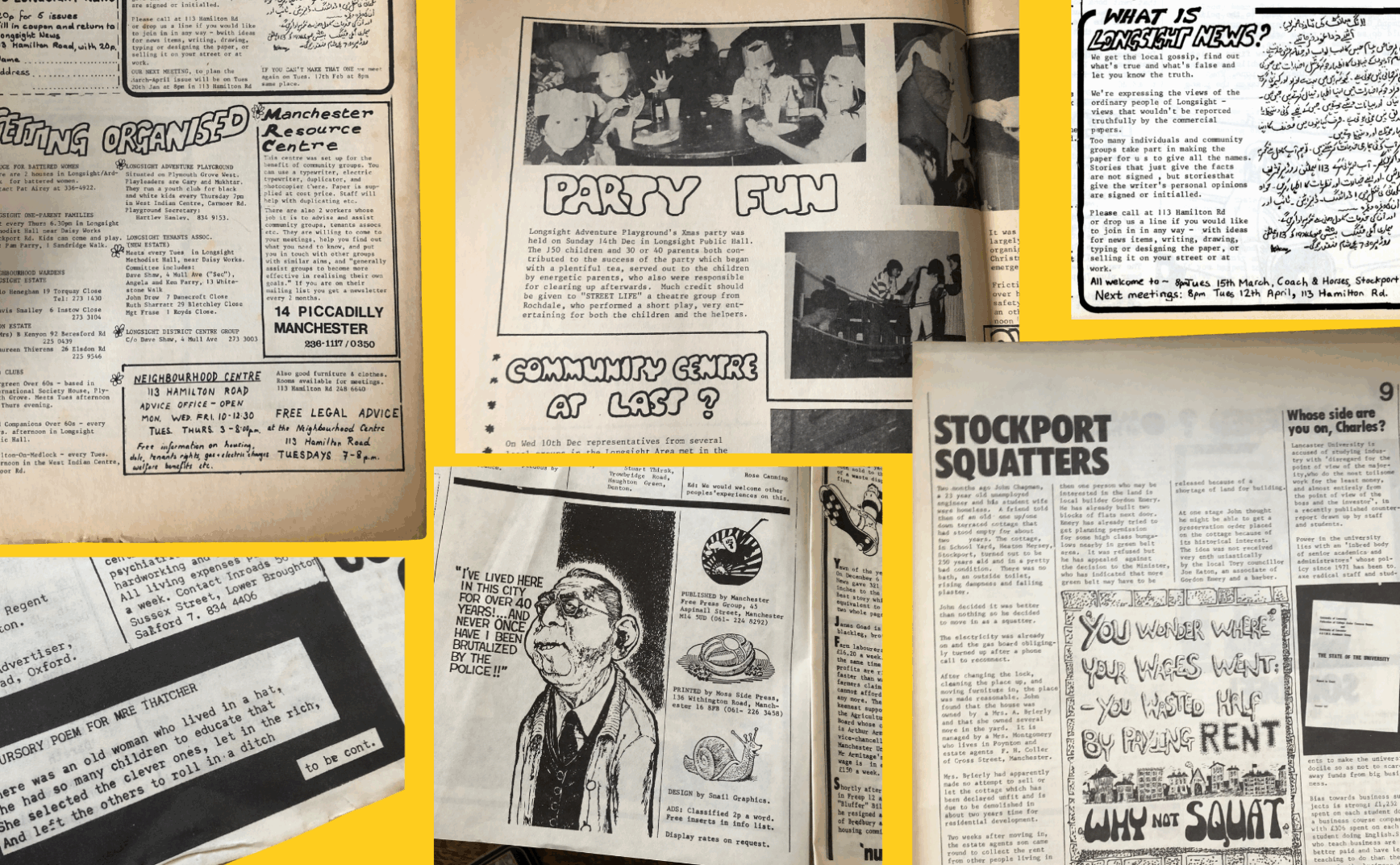
While the boundaries of what officially counts are a bit flexible, in my research I’ve come across close to twenty different “people’s papers” from Greater Manchester in this period with a couple others mentioned but not found in the Working Class Movement Library collection. In some cases, these were more affiliated with the underground or counterculture scene, often with a particular focus on music or a more general scope of the city such as the Mole Express, Grass Eye or the alternative city paper, The Manchester Free Press. Others, as connected to an often much less documented history, focused on specific local neighborhoods: from the North Manchester Eye to Moss Side News to Longsight News and beyond! While practically unknown by today’s generation of Mancunians (especially as they often don’t appear to exist on the internet!), these “people’s papers” provide a fascinating snapshot of everyday life and politics at this time.
Foregrounding alternative urban histories:
Along with a recap of this research at the event, I also shared about how my interest in these types of publications connected to the spatial politics and grassroots urban history that they capture. Along with covering information about the production of these various publications, in the discussion we also talked about the importance of particular community places, projects and organizing efforts that are both documented within these archival materials as well as those that were central to their creation and distribution.
This importantly included print shops like the Moss Side Community Press, which was an absolutely vital infrastructure for printing many of these community papers, as well as the cooperatively run Grass Roots Books, which again provided an important means and point of distribution and circulation (and which now has its archives at the Central Library). Another key place that came up a number of times was Waterloo Place on the University of Manchester’s campus. Facing threats of demolition by the University in the 1970s the building was initially occupied and then given over as “a community oriented annexe of the [Student] Union” — as a flyer one person shared as the event described it. Providing an initial home to many new projects and groups at this time, it served as one important center and shared space of alternative, grassroots and countercultural politics that unfortunately has little recognition or commemoration today, at least on campus. More about this history, including Dave’s reflections, are now posted on Instagram here.
We also had a whole range of contributions, including a presentation from Bob Dickinson sharing about his experiences with and writing about Manchester’s alternative press and Maggie Walker sharing about Longsight News as well Bob Jones talking about Mole Express and many others!
We also had a table full of materials people brought to share as well as AIU Race Centre’s collection of Moss Side News on display.
Overall, there were many more interesting reflections and experiences of 1970s Manchester shared, so I would really recommend checking out the full recording if you’re interested in these materials or histories! You can also learn more about or get regular updates on this project via Instagram, Bluesky or on the Working Class Movement Library blog.